GETTING STARTED
Kore.ai XO Platform
Virtual Assistants Overview
Natural Language Processing (NLP)
Concepts and Terminology
Quick Start Guide
Accessing the Platform
Navigating the Kore.ai XO Platform
Building a Virtual Assistant
Help & Learning Resources
Release Notes
Current Version
Recent Updates
Previous Versions
Deprecations
Request a Feature
CONCEPTS
Design
Storyboard
Overview
FAQs
Conversation Designer
Overview
Dialog Tasks
Mock Scenes
Dialog Tasks
Overview
Navigate Dialog Tasks
Build Dialog Tasks
Node Types
Overview
Intent Node
Dialog Node
Dynamic Intent Node
GenAI Node v2
Configure GenAI Node v2
GenAI Node
GenAI Prompt
Entity Node
Form Node
Confirmation Node
Message Nodes
Logic Node
Bot Action Node
Service Node
Webhook Node
Script Node
Process Node
Agent Transfer
Node Connections
Node Connections Setup
Sub-Intent Scoping
Entity Types
Entity Rules
User Prompts or Messages
Voice Call Properties
Knowledge AI
Introduction
Knowledge Graph
Introduction
Terminology
Build a Knowledge Graph
Manage FAQs
Knowledge Extraction
Import or Export Knowledge Graph
Prepare Data for Import
Importing Knowledge Graph
Exporting Knowledge Graph
Auto-Generate Knowledge Graph
Knowledge Graph Analysis
Answer from Documents
Alert Tasks
Small Talk
Digital Skills
Overview
Digital Forms
Digital Views
Introduction
Widgets
Panels
Session and Context Variables
Context Object
Intent Discovery
Train
NLP Optimization
ML Engine
Overview
Model Validation
FM Engine
KG Engine
Traits Engine
Ranking and Resolver
Training Validations
NLP Configurations
NLP Guidelines
LLM and Generative AI
Introduction
LLM Integration
Kore.ai XO GPT Module
Prompts & Requests Library
Co-Pilot Features
Dynamic Conversations Features
PII and Sensitive Data Anonymization
Guardrails
Intelligence
Introduction
Event Handlers
Contextual Memory
Contextual Intents
Interruption Management
Multi-intent Detection
Amending Entities
Default Conversations
Conversation Driven Dialog Builder
Sentiment Management
Tone Analysis
Default Standard Responses
Ignore Words & Field Memory
Test & Debug
Overview
Talk to Bot
Utterance Testing
Batch Testing
Conversation Testing
Conversation Testing Overview
Create a Test Suite
Test Editor
Test Case Assertion
Test Case Execution Summary
Glossary
Health and Monitoring
NLP Health
Flow Health
Integrations
Actions
Actions Overview
Asana
Configure
Templates
Azure OpenAI
Configure
Templates
BambooHR
Configure
Templates
Bitly
Configure
Templates
Confluence
Configure
Templates
DHL
Configure
Templates
Freshdesk
Configure
Templates
Freshservice
Configure
Templates
Google Maps
Configure
Templates
Here
Configure
Templates
HubSpot
Configure
Templates
JIRA
Configure
Templates
Microsoft Graph
Configure
Templates
Open AI
Configure
Templates
Salesforce
Configure
Templates
ServiceNow
Configure
Templates
Stripe
Configure
Templates
Shopify
Configure
Templates
Twilio
Configure
Templates
Zendesk
Configure
Templates
Agents
Agent Transfer Overview
Custom (BotKit)
Drift
Genesys
Intercom
NiceInContact
NiceInContact(User Hub)
Salesforce
ServiceNow
Configure Tokyo and Lower versions
Configure Utah and Higher versions
Unblu
External NLU Adapters
Overview
Dialogflow Engine
Test and Debug
Deploy
Channels
Publishing
Versioning
Analyze
Introduction
Dashboard Filters
Overview Dashboard
Conversations Dashboard
Users Dashboard
Performance Dashboard
Custom Dashboards
Introduction
Custom Meta Tags
Create Custom Dashboard
Create Custom Dashboard Filters
LLM and Generative AI Logs
NLP Insights
Task Execution Logs
Conversations History
Conversation Flows
Conversation Insights
Feedback Analytics
Usage Metrics
Containment Metrics
Universal Bots
Introduction
Universal Bot Definition
Universal Bot Creation
Training a Universal Bot
Universal Bot Customizations
Enabling Languages
Store
Manage Assistant
Team Collaboration
Plan & Usage
Overview
Usage Plans
Templates
Support Plans
Invoices
Authorization
Conversation Sessions
Manage URLs
Multilingual Virtual Assistants
Get Started
Supported Components & Features
Manage Languages
Manage Translation Services
Multiingual Virtual Assistant Behavior
Feedback Survey
Masking PII Details
Variables
Collections
IVR Settings
General Settings
Assistant Management
Manage Namespace
Data
Overview
Guidelines
Data Table
Table Views
App Definitions
Data as Service
HOW TOs
Build a Travel Planning Assistant
Travel Assistant Overview
Create a Travel Virtual Assistant
Design Conversation Skills
Create an ‘Update Booking’ Task
Create a Change Flight Task
Build a Knowledge Graph
Schedule a Smart Alert
Design Digital Skills
Configure Digital Forms
Configure Digital Views
Train the Assistant
Use Traits
Use Patterns
Manage Context Switching
Deploy the Assistant
Use Bot Functions
Use Content Variables
Use Global Variables
Use Web SDK
Build a Banking Assistant
Design Conversation Skills
Create a Sample Banking Assistant
Create a Transfer Funds Task
Create a Update Balance Task
Create a Knowledge Graph
Set Up a Smart Alert
Design Digital Skills
Configure Digital Forms
Configure Digital Views
Add Data to Data Tables
Update Data in Data Tables
Add Data from Digital Forms
Train the Assistant
Composite Entities
Use Traits
Use Patterns for Intents & Entities
Manage Context Switching
Deploy the Assistant
Configure an Agent Transfer
Use Assistant Functions
Use Content Variables
Use Global Variables
Intent Scoping using Group Node
Analyze the Assistant
Create a Custom Dashboard
Use Custom Meta Tags in Filters
APIs & SDKs
API Reference
API Introduction
Rate Limits
API List
koreUtil Libraries
SDK Reference
SDK Introduction
Web SDK
How the Web SDK Works
SDK Security
SDK Registration
Web Socket Connect and RTM
Tutorials
Widget SDK Tutorial
Web SDK Tutorial
BotKit SDK
BotKit SDK Deployment Guide
Installing the BotKit SDK
Using the BotKit SDK
SDK Events
SDK Functions
Installing Botkit in AWS
Tutorials
BotKit - Blue Prism
BotKit - Flight Search Sample VA
BotKit - Agent Transfer

ADMINISTRATION
Intro to Bots Admin Console
Administration Dashboard
User Management
Managing Your Users
Managing Your Groups
Role Management
Manage Data Tables and Views
Bot Management
Enrollment
Inviting Users
Sending Bulk Invites to Enroll Users
Importing Users and User Data
Synchronizing Users from Active Directory
Security & Compliance
Using Single Sign-On
Two-Factor Authentication for Platform Access
Security Settings
Enterprise Key Management
BYOK for AWS
Analytics for Bots Admin
Billing
  1. ホーム
  2. Docs
  3. Virtual Assistants
  4. Builder
  5. Dialog Task
  6. スクリプトノード

スクリプトノード

スクリプトノードでは、ダイアログタスクにJavaScriptのコードを書くことができます。スクリプトノードを使用して、以下のアクションを実行できます。

  • APIコールを実行する前に、ユーザーの入力パラメータを操作します。
  • ダイアログを続行する前に、APIレスポンスペイロードからパラメータを操作します。
  • カスタムエラーメッセージをユーザーに表示します。
  • 複雑なビジネスルールに基づいて意思決定を行います。

ボットビルダーでダイアログをテストすると、スクリプトノードエラーが スクリプトノードのエラーダイアログに行番号と列番号、関連するContextオブジェクトとともに表示されます。次の図のように、スクリプトノードのエラー ダイアログで直接スクリプトを更新したりテストしたりすることができます。

スクリプトノードのセットアップ

ダイアログタスクにおけるスクリプトノードのセットアップは、以下の手順で行います。

セットアップ

ダイアログタスクにおけるスクリプトノードのセットアップは、以下の手順で行います。メモ:プラットフォームのv9.0以降では、スクリプトノードはボットアクションノードの下に分類されます。ボットアクションノードの詳細はこちらをクリックしてください。

ノードの追加

  1. ダイアログタスクを開き、スクリプトノードを追加します。
  2. スクリプトノードを指定された場所に追加します。ノードの追加手順についてはこちらをご参照ください。
  3. 「スクリプト」ウィンドウは、デフォルトではコンポーネントプロパティタブが選択された状態で表示されます。
  4. 接続プロパティを設定できます。詳細はこちらをご参照ください。

ノードの設定

コンポーネントプロパティ

メモ:これらのセクションでセットアップまたは編集した設定は、このノードを使用する他のすべてのダイアログタスクに反映されます。

  1. コンポーネントプロパティタブの一般設定セクションで、スクリプトノードの名前と表示名を入力します。ノード名では、スペースを含めることはできません。
  2. スクリプトの定義セクションでスクリプトの定義をクリックして、JavaScriptを追加します。
  3. スクリプトの追加ダイアログボックスでJavaScriptを入力して、保存をクリックします。JavaScriptのコード例については、以下をご覧ください。
  4. 可変ネームスペースセクションでは、可変ネームスペースを関連付けてこのノードとその遷移を実行します。このオプションは、可変ネームスペースがボットに対して有効になっている場合にのみ表示されます。タスクレベルの設定を使用するか、またはこのノード用にカスタマイズできます。詳細情報は、ネームスペースの管理をご参照ください。

JavaScriptの例

JavaScriptを使用して、APIコールの前後でデータを処理して、ダイアログタスクをカスタマイズすることができます。例:ダイアログのタスクフローを指示。Contextオブジェクトの先行入力機能を使用して、次の図のように動的変数を特定して選択することができます。詳細情報は、コンテキストオブジェクトをご参照ください。 先行入力コンテキストオブジェクト
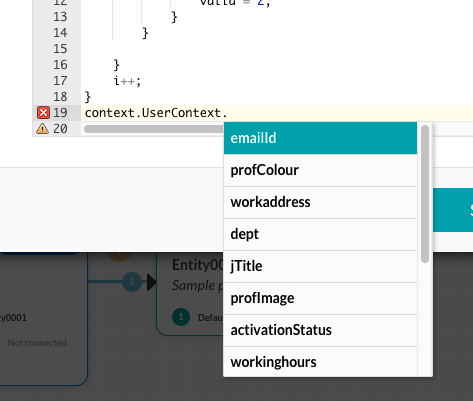
データの操作

JavaScript では、セッション変数を使用してセッションデータからデータを取得することができます。例として、context.session.UserContext.identitiesを使用して、ユーザーIDを手にいれ(GET)、次の例に示すように、そのデータをcontextに入力する(PUT)ことができます。

var x = context.session.UserContext.identities;
var isEmailFound = false;
for (var i = 0; i < x.length; i++) {
    if (x[i].type === "mapped") {
        var identity = x[i].val;
        var arr = identity.split("/");
        var pattern = /^cs/i;
        var result = arr[0].match(pattern);
        if (result) {
            isEmailFound = true;
            context.UserSession.put("rtmEmail", arr[1], '20000');
        }
    }
}
...

詳細については、タスクのセッション変数とコンテキスト変数の使用をご参照ください。

取り扱い条件

以下のコード例は、IDが提供されない場合に、サービスノードの応答本文からContextオブジェクト変数を使用して、顧客IDを返します。 data.results

var data = context.getcontactsService.response.body;
if (data & amp; & amp; typeof(data.results) != 'undefined') {
 context.customerID = data.results.customerId;
} else {
 context.customerID = context.Usersession.customerID;
}

取り扱いフロー

次のスクリプトノードのコード例では、Contextオブジェクト変数を使用して、選択した口座の種類の制限を超過しない銀行送金額を検証しています。

var valid = 0;
var i = 0;
while (context.accdata.length - i) {
 if (context.accdata[i].accountType == context.entities.FromAccountName) {
  if ((context.accdata[i].amount - context.entities.Amount) < 0) { valid = 3; } else { if (context.entities.Amount > context.accdata[i].transferLimit) {
    valid = 0;
   } else {
    valid = 2;
   }
  }
 }
 i++;
}
context.canProceed = valid;

スクリプトノード

スクリプトノードでは、ダイアログタスクにJavaScriptのコードを書くことができます。スクリプトノードを使用して、以下のアクションを実行できます。

  • APIコールを実行する前に、ユーザーの入力パラメータを操作します。
  • ダイアログを続行する前に、APIレスポンスペイロードからパラメータを操作します。
  • カスタムエラーメッセージをユーザーに表示します。
  • 複雑なビジネスルールに基づいて意思決定を行います。

ボットビルダーでダイアログをテストすると、スクリプトノードエラーが スクリプトノードのエラーダイアログに行番号と列番号、関連するContextオブジェクトとともに表示されます。次の図のように、スクリプトノードのエラー ダイアログで直接スクリプトを更新したりテストしたりすることができます。

スクリプトノードのセットアップ

ダイアログタスクにおけるスクリプトノードのセットアップは、以下の手順で行います。

セットアップ

ダイアログタスクにおけるスクリプトノードのセットアップは、以下の手順で行います。メモ:プラットフォームのv9.0以降では、スクリプトノードはボットアクションノードの下に分類されます。ボットアクションノードの詳細はこちらをクリックしてください。

ノードの追加

  1. ダイアログタスクを開き、スクリプトノードを追加します。
  2. スクリプトノードを指定された場所に追加します。ノードの追加手順についてはこちらをご参照ください。
  3. 「スクリプト」ウィンドウは、デフォルトではコンポーネントプロパティタブが選択された状態で表示されます。
  4. 接続プロパティを設定できます。詳細はこちらをご参照ください。

ノードの設定

コンポーネントプロパティ

メモ:これらのセクションでセットアップまたは編集した設定は、このノードを使用する他のすべてのダイアログタスクに反映されます。

  1. コンポーネントプロパティタブの一般設定セクションで、スクリプトノードの名前と表示名を入力します。ノード名では、スペースを含めることはできません。
  2. スクリプトの定義セクションでスクリプトの定義をクリックして、JavaScriptを追加します。
  3. スクリプトの追加ダイアログボックスでJavaScriptを入力して、保存をクリックします。JavaScriptのコード例については、以下をご覧ください。
  4. 可変ネームスペースセクションでは、可変ネームスペースを関連付けてこのノードとその遷移を実行します。このオプションは、可変ネームスペースがボットに対して有効になっている場合にのみ表示されます。タスクレベルの設定を使用するか、またはこのノード用にカスタマイズできます。詳細情報は、ネームスペースの管理をご参照ください。

JavaScriptの例

JavaScriptを使用して、APIコールの前後でデータを処理して、ダイアログタスクをカスタマイズすることができます。例:ダイアログのタスクフローを指示。Contextオブジェクトの先行入力機能を使用して、次の図のように動的変数を特定して選択することができます。詳細情報は、コンテキストオブジェクトをご参照ください。 先行入力コンテキストオブジェクト

データの操作

JavaScript では、セッション変数を使用してセッションデータからデータを取得することができます。例として、context.session.UserContext.identitiesを使用して、ユーザーIDを手にいれ(GET)、次の例に示すように、そのデータをcontextに入力する(PUT)ことができます。

var x = context.session.UserContext.identities;
var isEmailFound = false;
for (var i = 0; i < x.length; i++) {
    if (x[i].type === "mapped") {
        var identity = x[i].val;
        var arr = identity.split("/");
        var pattern = /^cs/i;
        var result = arr[0].match(pattern);
        if (result) {
            isEmailFound = true;
            context.UserSession.put("rtmEmail", arr[1], '20000');
        }
    }
}
...

詳細については、タスクのセッション変数とコンテキスト変数の使用をご参照ください。

取り扱い条件

以下のコード例は、IDが提供されない場合に、サービスノードの応答本文からContextオブジェクト変数を使用して、顧客IDを返します。 data.results

var data = context.getcontactsService.response.body;
if (data & amp; & amp; typeof(data.results) != 'undefined') {
 context.customerID = data.results.customerId;
} else {
 context.customerID = context.Usersession.customerID;
}

取り扱いフロー

次のスクリプトノードのコード例では、Contextオブジェクト変数を使用して、選択した口座の種類の制限を超過しない銀行送金額を検証しています。

var valid = 0;
var i = 0;
while (context.accdata.length - i) {
 if (context.accdata[i].accountType == context.entities.FromAccountName) {
  if ((context.accdata[i].amount - context.entities.Amount) < 0) { valid = 3; } else { if (context.entities.Amount > context.accdata[i].transferLimit) {
    valid = 0;
   } else {
    valid = 2;
   }
  }
 }
 i++;
}
context.canProceed = valid;
メニュー